
Who We Are
A movement of churches united in Christ, committed to worship, discipleship, and serving communities across Barbados since 1912.
A Message from Our Chairman
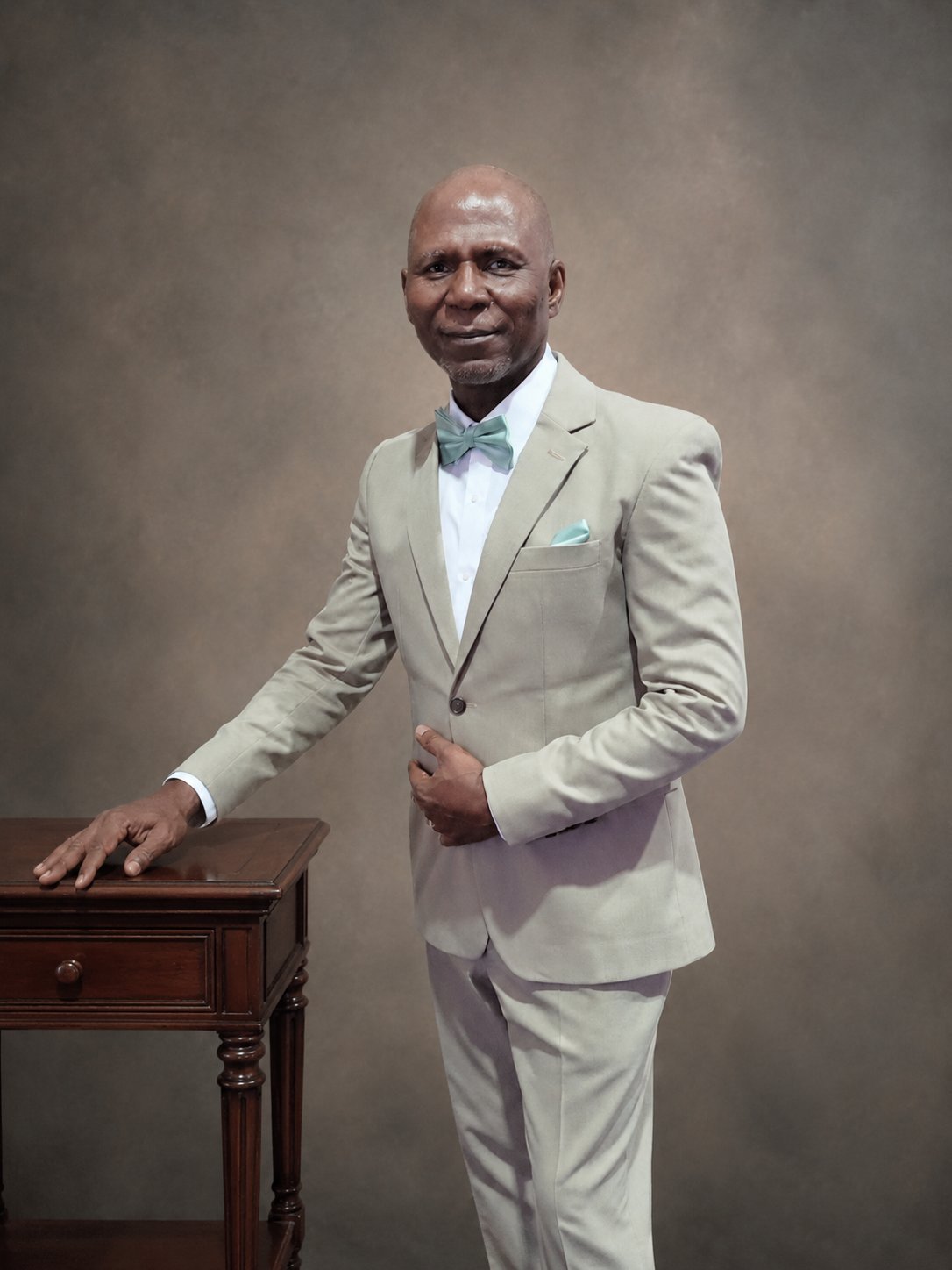
Reverend Vasco Perry
I recently had the privilege of representing the General Assembly of the Church of God in Barbados at the Caribbean Atlantic Assembly (CAA) Summerfest 2026, hosted in Nevis — the smaller isle of the Federation of Saint Christopher (Kitts) and Nevis.
The name “Summerfest” may bring to mind dancing, shouting, and joyful celebration. Indeed, those images are true — but the difference is that every dance, every shout, and every moment of joy was offered in the presence of the Lord and with His blessing.
At this gathering, the Regional Women of the Church of God, the Regional Men of the Church of God, the Regional Youth Fellowship, and leaders from across the Caribbean came together with one purpose: to hear from God, to be empowered by His Spirit, and to lift high the name of Jesus Christ. By His grace, all three were accomplished.
Over the days of July 11–15, we were enriched by a cadre of anointed presenters and speakers. Their ministry left me pondering: “With such giftedness among us, why is the regional Church of God not even more vibrant?” Yet I was encouraged, knowing that our denomination is blessed with remarkable talent. I resolved that part of my duty is to help expose these gifts to the wider body of Christ — and to seek out others who have not yet been platformed.
I rejoice that I was able to meet brothers and sisters from Trinidad and Tobago, Antigua, Grenada, St. Vincent, St. Kitts and Nevis, Guyana, Jamaica, and Barbados. What a joy to fellowship with the wider family of God, and I eagerly look forward to doing so again in 2028, if the Lord wills.
I also commend the Barbados contingent. You represented Christ well in numbers, participation, and in the genuine reflection of His character. Special thanks to congregations who encouraged new persons to attend, and to those who sent multiple delegates. The WCG deserves particular mention for supporting its leader’s attendance.
Looking ahead, it is being considered that Barbados may host Summerfest in 2030. That is only four years away. Given the expense of our island, I urge us to begin planning now. Let us show brotherly love by opening our homes. Could you retrofit a room to host a guest? Would you be willing to offer it for a modest fee and provide breakfast? Such hospitality would surely please the Lord and strengthen our fellowship.
Let us therefore prepare to make Summerfest 2030 a powerful and memorable testimony of God’s presence among His people.
I close by praying the blessing of Genesis 27:28 over your life: “May God give you heaven’s dew and earth’s richness — an abundance of grain and new wine.”
Stay blessed in Christ,
Reverend Vasco Perry
Chairman, General Assembly of the Church of God Barbados
 Our Mission
The Church of God Exists To…
We are a movement committed to carrying out the Great Commission of Jesus Christ, united in faith and serving communities across Barbados with the love of God.
Worship the Lord
Lifting high the name of Jesus through heartfelt worship, prayer, and praise in spirit and in truth. Worship is the first and highest purpose of the Church — central to the life of every believer and every congregation.
Reach the Lost
Sharing the gospel of Jesus Christ with our communities and beyond, fulfilling the Great Commission to make disciples of all nations, beginning in our own neighbourhoods across Barbados.
Disciple Believers
Nurturing spiritual growth through sound biblical teaching, mentorship, and small-group fellowship. We are committed to helping every believer mature to Christlikeness.
Equip for Ministry
Empowering every believer to discover and use their God-given gifts for service in the church and the world. Every member has a calling and a contribution to make for the kingdom.
Celebrate Unity
Pursuing the oneness for which Jesus prayed — united across congregations as one body in Christ, transcending denominational loyalties in pursuit of genuine Christian fellowship.
Live Out the Love of Christ
Demonstrating God's love through compassionate action, tangible service, and genuine care for all people — in our churches, our communities, and across Barbados.
Our Story
From a reformation movement in the American Midwest to a thriving family of churches across Barbados — this is the story of God's faithfulness across generations.
The Church of God Reformation Movement
The Church of God reformation movement began in 1881 with United States offices in Anderson, Indiana. It was founded as a movement emphasising the unity of God's people and holy living. Daniel S. Warner and his associates sought to move away from denominational hierarchies and formal creeds, trusting solely in the Holy Spirit as their overseer and the Bible as their statement of belief.
Their aim was not to establish another denomination but to promote primary allegiance to Jesus Christ — so as to transcend denominational loyalties. Warner became increasingly convinced that denominational divisions were contrary to the will of Christ and to the prayer of Jesus in John 17: "that they all may be one."
The movement is not historically related to Church of God bodies rooted in the Tennessee/Carolinas holiness revival of the late nineteenth century. It shares holiness commitments but does not emphasise speaking in tongues in the manner associated with Pentecostal churches.
Influenced by Wesleyan theology and Pietism, the Church of God's teachings include: the divine inspiration of Scripture; forgiveness of sin through Christ's atonement and repentance; the experience of holiness; the personal return of Christ; the kingdom of God as established here and now; the resurrection of the dead; and a final judgment with reward for the righteous and punishment for the wicked.
"The Church of God is not a denomination — it is the body of Christ, composed of all who have been born again. We stand on the simple truth that Jesus Christ is the head of the church, and our allegiance is to Him alone."
— Daniel S. Warner (1842–1895)
Baptism by immersion serves as a witness to the believer's regeneration. The Lord's Supper reminds participants of grace experienced. Foot washing acknowledges the servant ministry of all Christians. These ordinances are not considered mandatory conditions of Christian experience or fellowship — consistent with a conviction that unity is based on spiritual experience rather than creedal agreement.
There is no formal membership; individuals are assumed members on the basis of personal conversion and conduct that supports that conversion experience. Government is congregational; each local congregation is autonomous. Ministers meet in voluntary assemblies. In 1996–1997, a restructuring produced Church of God Ministries, Inc., with priorities identified by grassroots church representatives.
International Growth
In 1891, the movement's first missionary was sent to Mexico. The Church of God has since grown into a multi-national community of faith. The largest church concentrations in the United States are in the Midwest, Pacific Coast, and western Pennsylvania, with an average weekend attendance of approximately 235,000 across the U.S. and Canada.
Today the movement counts about 2,300 congregations in the United States and Canada, with work in 90 countries worldwide, approximately 7,340 churches, and over 750,000 believers.
The Gospel Reaches Barbados
Rev. Noah S. Duncan disembarked in Barbados three times between 1906–09, having established a mission in Trinidad in 1906. During a stopover, he distributed literature and found great interest. The work was truly started by a Barbadian, Bro. Philip Scantlebury, who had lived in America and returned in 1912 to visit his ill mother. He gathered a small group in Mile-and-a-Quarter in St. Peter and started open-air services under a tamarind tree.
Missionaries Revs. J. Frank Shaw and George A. Coplin, who had gone to Trinidad, visited Barbados to further establish the work. They arrived on March 17, 1912. Scantlebury met them and took them to Mile-and-a-Quarter. That night they began a revival lasting two to three weeks. They rented a house near the Scantleburys and settled in.
Two months later, Coplin was recalled to Trinidad, leaving Shaw in sole charge. Having little experience, Shaw was "rather timid about having a church, whose membership had now reached 40, in his care." He started prayer meetings every morning at different homes and organised a singing class. Miss Maude Smith, who had stayed in Trinidad, came to Barbados to help.
In 1913, the group moved from Mile-and-a-Quarter to the Reef in Bridgetown, where a tent was erected. Bro. and Sis. Blewitt arrived on a visit from the U.S. — Bro. Blewitt later played an important role in purchasing a property as a missionary home. During his early ministry, Shaw learned to pray "Lord, give us this day our daily bread" — many mornings he awoke with nothing, but God answered through people bringing gifts of cassava, eggs, potatoes, chickens, and many other things.
Through decades of growth, challenge, and God's enduring faithfulness, the Church of God in Barbados grew to eighteen congregations serving communities in every parish.
"From the open-air meetings under a tamarind tree at Mile-and-a-Quarter to the eighteen congregations we have today, God has been faithful. This is His work, and we are privileged to be part of it."
— Reflecting on the Barbados story
18 Congregations Across Barbados
Today, the General Assembly of the Church of God Barbados serves communities across every parish through worship, discipleship, outreach, and ministry. Our eighteen congregations — from Avis Town in St. Lucy to Silver Sands in Christ Church — are united in faith and committed to living out the love of Christ in their communities.
We remain committed to the same vision that inspired Daniel S. Warner in 1881 and that drove Rev. Noah S. Duncan and Bro. Philip Scantlebury to bring the gospel to Barbados: a church united in Christ, devoted to holy living, and passionate about sharing the good news with the world.
The Six Mission Statements
In 1995, 120 Church of God leaders from North America gathered for a Visioning Retreat and embraced six vision statements. These six commitments now guide every congregation, every ministry, and every member of the Church of God in Barbados.
Worship
- Focus on New Testament meanings of corporate and private worship.
- Provide opportunities for persons to worship in varying styles.
- Continue to strive toward renewal in understanding and practice of worship.
- Prepare clergy and laity of all ages to lead the local church in worship.
Evangelism
- Practice global evangelism with the goal of winning the world to Jesus Christ.
- Seek the lost by equipping laity for personal evangelism and creating outreach ministries.
- Communicate the Gospel worldwide through broadcasting, commissioning missionaries at home and abroad, planting new churches, and revitalising evangelism training and materials.
Discipleship
- Preach, teach, and practice biblical holiness.
- Provide continuing discipleship opportunities for believers of all ages.
- Develop small groups and small group leaders with a focus on discipleship.
- Equip clergy and laity to develop discipling programs in local churches, sponsor conferences and workshops, and provide periodicals and curriculum that challenge believers to growth and holiness.
Leadership Development
- Focus on biblical and theological foundations, ethical and relational awareness, and leadership and organisational principles.
- Enable and equip others for ministry through practical experience.
- Support seminary education and provide scholarships for pastoral ministry preparation and continuing education.
- Provide training programs and materials to equip laity — and publish books on doctrine, theology, Christian training, and inspiration.
Unity
- Preach, teach, and practice the oneness of the Body of Christ.
- Celebrate the unity and diversity of the Body of Christ.
- Embrace ethnic diversity and unity in practical and visible forms.
- Seek dialogue and partnerships among congregations, agencies, para-church organisations, and other church bodies.
Stewardship of Love
- Demonstrate the tangible love of Christ in our communities.
- Nurture, heal, and strengthen families.
- Provide for and enable those who need shelter, food, and medicine.
- Care for the 'least of these' — children, the poor, the imprisoned, the physically and mentally ill, and the oppressed.
- Proclaim and practice prayer for divine healing and seek justice in local, national, and international communities.
We'd Love to Hear from You
Whether you have questions about our churches, want to connect with a congregation near you, or simply want to learn more about the Church of God in Barbados — reach out and we'll be happy to help.
Address
Coleman Road, Jackson
St. Michael, Barbados
Phone
(246) 426-5327
office@churchofgodbarbados.org
Office Hours
Monday – Friday: 8:00 a.m. – 4:00 p.m.
Saturday – Sunday: Closed